The Substance Use Disorder Treatment and Prevention Workgroup of the Human Services Collaborative Body is being sent for your review, publication, and/or announcement. If you have any questions, please contact Grace Dennis.
Overview:
The holiday season can be a challenging time for individuals in recovery. Increased social pressure and the availability of alcohol and drugs can trigger anxiety and stress. To support those in recovery, it’s crucial to build a strong support network, including family, friends, peer support, and support groups like Alcoholics Anonymous (AA), Narcotics Anonymous (NA), Smart Recovery, and Celebrate Recovery.
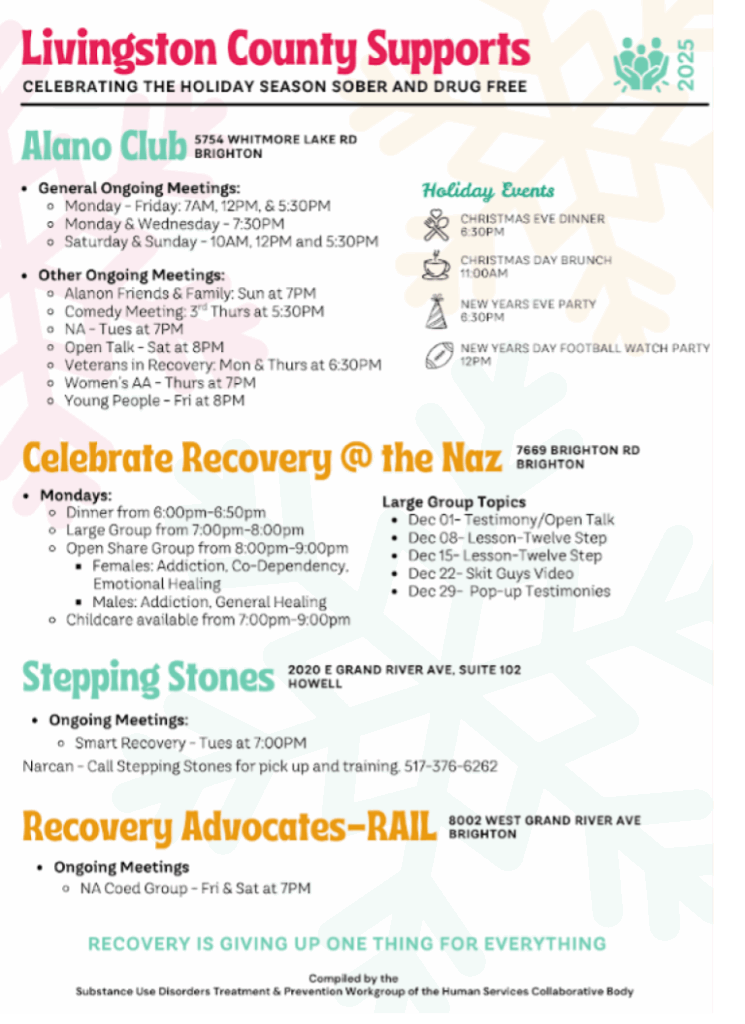
The Substance Use Disorder Treatment and Prevention Workgroup in Livingston County has developed a calendar of sober events and meetings to foster community and provide a positive environment for individuals in recovery. By participating in these events and connecting with others, individuals can find strength and support during the holiday season.
The holiday season is a time for fun and celebration, but it can be hard for people who are trying to stay
sober and drug free. Parties may have alcohol or drugs, which can make people feel anxious, lonely, or
stressed. This can be especially tough for someone who is celebrating their first holiday season in
recovery.
The holidays overwhelm nearly 9 in 10 American adults. Missing loved ones, tight finances, and family
tensions are common and for anyone in recovery these stressors can feel even heavier.
It’s important to recognize stress and find ways to cope. Joining supportive groups and participating in
fun, sober and drug free activities can help create a sense of community for individuals in recovery. The
Substance Use Disorder Treatment and Prevention Workgroup of the Human Services Collaborative
Body (HSCB) has put together a calendar of recovery events and meetings in Livingston County. These
events are intended to connect people who are in recovery during the holiday season in a positive and
supportive way.
Having a trusted support network is also important for anyone in recovery. This network can include
family, friends, peer support, or support groups. Here are a few ways they can help:
● Family Support: Families can give emotional support and encouragement. They can listen,
understand problems, and help individuals in recovery feel more stable and comfortable.
● Friends: Good friends can spend time with each other in places where no drugs or alcohol are
involved. Friends can come together to do fun activities that help support their friend in
recovery and stay sober.
● Peer Support: Peer supports know what individuals in recovery are going through and can give
advice, share their own stories, and motivate individuals in recovery to keep going.
● Support Groups: Groups like Alcoholics Anonymous (AA), Narcotics Anonymous (NA), Celebrate
Recovery, and Smart Recovery connect others who are facing similar challenges. These groups
provide a safe place to talk and learn from each other.
The holiday season can bring about a wide range of emotions for anyone. Remember, no one is alone,
and there is support available within the community to help individuals thrive during this special time of
year. A list of Livingston County Support Groups can be found on the HSCB website.
The Substance Use Disorder Treatment and Prevention workgroup of the Human Services Collaborative
Body has additional resources specific to Livingston County. The workgroup is a partnership of local
substance use agencies who work together to create a continuum of services and support for people
experiencing addiction through recovery.
View the Recovery in Livingston County Fact Sheet or the Substance Use Disorder and Mental Health
Resource Guide for more information.
Substance Use Disorders Treatment & Prevention Workgroup
- Home
- Human Services Collaborative Body
- Substance Use Disorders Treatment & Prevention Workgroup
This Workgroup strives to ensure a coordinated, community owned substance use disorder continuum of care that is accessible, data driven and evidence based. To collaborate and communicate with agencies, providers, coalitions, courts, police, medical community, schools and community members.
Goals
- Through education and prevention, create an awareness in the community about the issues and realities of substance use disorders.
- Develop a professional community
- Develop overdose prevention strategies
- Reduce stigma
- Ensure a comprehensive continuum of care
- Proven evidence based models
- Fill gaps
- Establish a data driven process that can be used for funding, advocacy, gap filling, etc.
Partnerships
Success of the Substance Use Disorder Treatment and Prevention Workgroup is dependent upon the ongoing commitment of Livingston County organizations, officials, businesses, local governments and residents. This dedication to collaboration can be seen in the coordination of services and the willingness to sign a membership agreement on behalf of themselves and their organizations.